

In modern manufacturing and warehousing, space is money. Many factories face challenges with narrow aisles, multi-level layouts, and the need to move goods quickly without increasing labor costs. This is where Mini AMR Forklifts come in handy.
These compact, intelligent forklifts are built for environments where every centimeter counts, offering advanced automation without requiring major facility changes.
Why Mini AMR Forklifts Are Gaining Popularity
Unlike traditional forklifts that need wide aisles and trained drivers, Mini AMR forklifts combine small size with smart navigation to deliver precision, safety, and 24/7 operation. They’re ideal for:
-
Factories upgrading to smart logistics without tearing down existing shelves
-
Multi-story warehouses needing automatic elevator access
-
High-density storage environments where space optimization is critical
Reeman’s mini model, for example, is just narrow enough to operate in 1.1-meter aisles while carrying up to 500 kg and lifting 1.6 meters—a rare combination in the industry.
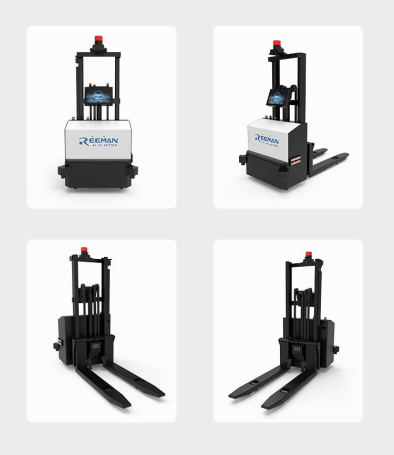
Key Features That Make the Difference
1. Ultra-Narrow Design
-
Operates in aisles as tight as 1.1 meters
-
1.35-meter turning radius for agile movement in tight spaces
2. Smart Navigation & Safety
-
60-meter LiDAR for obstacle detection
-
3D pallet recognition to ensure precise pickup and stacking
-
AI-driven path planning for real-time route adjustments
3. 24/7 Autonomous Operation
-
Automatic charging docks keep the forklift running around the clock
-
No human operator required, reducing labor dependency
4. Multi-Floor Capability
-
Integrates with elevators for cross-floor delivery without manual handling
Where Mini AMR Forklifts Fit Best
-
Manufacturing: Move raw materials between production lines with zero delays
-
E-commerce & Retail: Access high-density storage to maximize inventory capacity
-
Healthcare: Ensure contact-free delivery of medical supplies between floors
-
Hospitality: Transport goods without disrupting guests or staff
How to Choose the Right Mini AMR Forklift
When selecting a model, focus on:
-
Aisle width compatibility (measure your narrowest passage)
-
Payload requirements (Reeman’s handles 500 kg, heavier-duty models are available)
-
Navigation technology (LiDAR + vision for complex layouts)
-
Integration options with your WMS or MES
-
Safety features like emergency stop, real-time monitoring, and collision avoidance
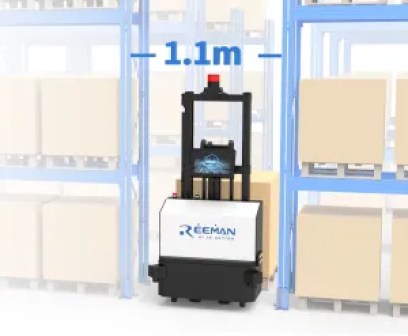
Why Reeman’s Mini AMR Forklift Stands Out
Reeman Robotics has engineered one of the world’s narrowest unmanned forklifts, designed for plug-and-play deployment. It’s perfect for old factory layouts, requires minimal setup, and comes with:
-
Ultra-compact design for narrow aisles
-
AI-powered navigation with obstacle avoidance
-
Elevator compatibility for vertical logistics
-
15-day return policy for risk-free trials
Final Thoughts
Mini AMR forklifts are more than just small machines—they’re strategic tools for factories and warehouses that want to maximize space, cut labor costs, and scale automation quickly. With models like Reeman’s leading the way, the future of compact, intelligent material handling is already here.
👉 Explore Reeman’s Mini AMR Forklift and see how it can transform your logistics without disrupting your current operations.
더 보기: 자율 지게차

Built for Rain: REEMAN Waterproof Ant All-Weather Outdoor Autonomous Forklift

REEMAN Ironhide가 원터치 호출로 하루 160–200회의 팔레트 운반을 자동화하는 방법

2T 자율주행 지게차 렌탈 vs. 구매: 중공업 제조에서 월간 운영 비용 계산하기

자율 지게차 리스 대 구매: 1.2T 카운터밸런스형 모델의 TCO 분석

Titan Mini 자율 지게차 vs 수동 팔레트 잭: 1.8미터 통로에 어떤 것이 더 적합할까?

Rhinoceros 자율 지게차 ROI: 고랙 창고의 적재 높이 대비 인건비 절감