

Introduction
The logistics industry is undergoing a major transformation as warehouses shift from manual forklift operations to autonomous and AI-powered systems. While traditional forklifts have long served as the backbone of material handling, autonomous forklifts are now revolutionizing productivity, safety, and efficiency.
However, choosing between the two requires understanding not just technology, but also your warehouse needs, infrastructure, and growth goals.
Understanding Traditional Forklifts
Traditional forklifts rely entirely on human operators for movement, navigation, and load handling. They are versatile, cost-effective for small operations, and suitable where environments are complex or constantly changing.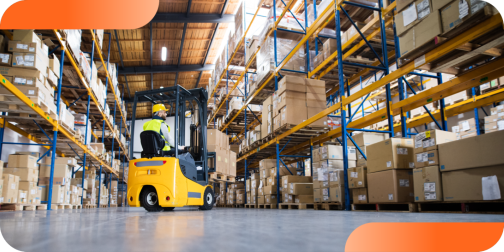
Advantages:
-
Low initial investment compared to autom
-
ation.
-
Flexible in unpredictable or highly manual environments.
-
Easy to operate and maintain with minimal technical setup.
Limitations:
-
Labor-dependent and prone to human error.
-
Higher long-term operational costs due to wages, fatigue, and accidents.
-
Limited scalability and efficiency for 24/7 operations.
As demand for high-volume, high-precision logistics grows, these limitations become significant barriers for modern warehouses.
Rise of Autonomous Forklifts
Autonomous forklifts (AGVs and AMRs) integrate advanced navigation technologies such as Laser SLAM, Visual SLAM (VSLAM), and AI perception systems to operate independently.
They move materials safely and precisely, detect obstacles, plan routes, and even communicate with other robots — all without human control.
Core Technologies:
-
AI & Machine Learning: Enables self-learning and real-time decision-making.
-
SLAM Navigation: Creates and updates maps for accurate localization.
-
Sensor Fusion: Combines LiDAR, vision, and radar for enhanced awareness.
-
Fleet Management Systems: Coordinates multiple robots for optimal workflow.
Traditional vs. Autonomous Forklifts: A Quick Comparison
| Category | Traditional Forklift | Autonomous Forklift (AGV/AMR) |
|---|---|---|
| Operation | Manual, driver-dependent | Fully automated with AI navigation |
| Navigation | Visual by operator | SLAM / VSLAM mapping & localization |
| Safety | Relies on operator skill | Obstacle detection & avoidance |
| Efficiency | Human-limited speed | Continuous 24/7 operation |
| Cost | Low upfront, high long-term | Higher upfront, lower long-term |
| Scalability | Difficult to expand | Easily scalable through software |
| Scheduling | Manual coordination | Multi-robot intelligent scheduling |
| Maintenance | Mechanical | Software + mechanical updates |
This table shows that while traditional forklifts excel in flexibility and cost simplicity, autonomous forklifts dominate in precision, safety, and scalability.
Multi-Robot Scheduling: The Key to Smart Warehousing
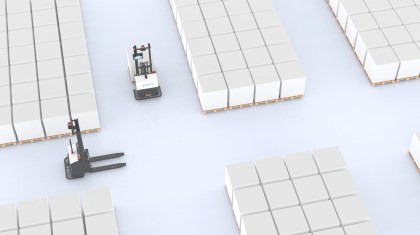
In advanced logistics systems, multi-robot scheduling—also known as fleet coordination—is a game changer.
When multiple autonomous forklifts operate in the same warehouse, AI-driven scheduling algorithms ensure they work together without conflict, collision, or downtime.
How It Works:
-
The system continuously collects data from all robots.
-
Routes and tasks are optimized in real-time based on traffic, battery levels, and priorities.
-
Forklifts communicate wirelessly to share task progress and avoid bottlenecks.
Benefits of Multi-Robot Scheduling:
-
Optimized Workflow: Reduces idle time and route overlap.
-
Improved Throughput: Multiple forklifts can handle concurrent operations efficiently.
-
Energy Efficiency: Balanced workload extends battery life and lowers energy use.
-
Scalability: Easy to add new forklifts without reprogramming routes.
For instance, Reeman’s AI-based fleet management system integrates SLAM navigation and multi-robot scheduling to achieve high-density warehouse automation — ensuring precise coordination among multiple unmanned forklifts in dynamic environments.
When to Choose Each Type
Choose Traditional Forklifts If:
-
Your warehouse has highly variable layouts or manual-heavy processes.
-
Budget constraints limit automation investment.
-
You need occasional or low-volume material transport.
Choose Autonomous Forklifts If:
-
You aim to reduce labor costs and improve long-term ROI.
-
Your operations run 24/7 or require high consistency.
-
You manage large-scale logistics centers or manufacturing plants.
In many cases, a hybrid approach—combining human-operated and autonomous forklifts—offers the most flexible and cost-effective transition toward full automation.
Challenges in Implementation
Even though autonomous forklifts offer significant advantages, successful deployment requires careful planning:
-
Initial integration with WMS and ERP systems.
-
Infrastructure readiness, such as reliable wireless connectivity.
-
Staff training for monitoring and maintenance.
-
Safety zoning for mixed human-robot environments.
However, as AI navigation and SLAM technologies advance, these barriers are becoming easier to overcome.
Conclusion
The decision between traditional and autonomous forklifts depends on your warehouse’s operational goals, scale, and budget.
While traditional forklifts remain effective for small-scale, flexible tasks, AI-powered autonomous forklifts deliver unmatched performance in safety, precision, and scalability — especially when enhanced with multi-robot scheduling systems.
As logistics automation continues to evolve, companies adopting intelligent forklift systems today are positioning themselves at the forefront of next-generation warehouse innovation.
🔗: Autonomous Forklifts: a new force in the logistics and warehousing supply chain
더 보기: 자율 지게차

자율주행 지게차는 자동문 및 스트레치 래퍼와 어떻게 연동될 수 있을까? REEMAN 공장 사례 연구

Built for Rain: REEMAN Waterproof Ant All-Weather Outdoor Autonomous Forklift

REEMAN Ironhide가 원터치 호출로 하루 160–200회의 팔레트 운반을 자동화하는 방법

2T 자율주행 지게차 렌탈 vs. 구매: 중공업 제조에서 월간 운영 비용 계산하기

자율 지게차 리스 대 구매: 1.2T 카운터밸런스형 모델의 TCO 분석

Titan Mini 자율 지게차 vs 수동 팔레트 잭: 1.8미터 통로에 어떤 것이 더 적합할까?