
AI + Autonomous Forklifts: How Smart Logistics Systems Help Manufacturers Cut Costs by 20%
Date Published

In today’s manufacturing world, where efficiency, cost reduction, and delivery reliability define competitiveness, internal logistics has become a key battlefield. Tasks like material transport, line feeding, and warehouse transfers may seem routine—but they often hide massive inefficiencies.
Manual forklift operations, route confusion, idle time, and poor coordination can quietly consume 15–25% of a factory’s profit every year.
Now, with the rise of AI-powered autonomous forklifts, smart logistics systems are transforming these weak points into value drivers. These machines are no longer just “moving tools”—they’re intelligent, data-driven logistics hubs that think, plan, and act autonomously.
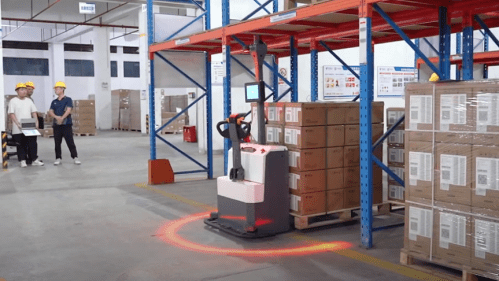
1. From “Manual Movers” to “Smart Coordinators”
Traditional forklifts depend on human drivers—high labor costs, inconsistent performance, and inefficient scheduling are the norm.
AI changes that. Through SLAM navigation, pathfinding algorithms, and fleet management intelligence, autonomous forklifts can perform real-time coordination across the entire facility.
For example:
-
When material levels on a line drop below a threshold, AI automatically dispatches the nearest forklift to restock.
-
Once finished goods are packed, AI plans the optimal route for delivery to storage or shipping.
-
When multiple vehicles operate simultaneously, AI prioritizes tasks and prevents traffic congestion.
2. The Three Key Ways AI Logistics Cuts Costs
(1) Reduce Labor Costs by up to 40%
A mid-sized factory may employ 6–8 forklift operators, each earning $800–$1,000 per month.
After switching to autonomous forklifts, only 1–2 remote supervisors are needed.
That translates to $60,000–$80,000 in annual labor savings per factory.
(2) Lower Energy and Maintenance Costs by 20–30%
AI dynamically assigns tasks and charging schedules based on workload and battery status, eliminating idle running.
Reeman’s autonomous forklifts use Li-FePO₄ batteries with automatic charging docks—boosting charging efficiency by 40% and doubling battery lifespan.
(3) Increase Storage Space Utilization by 25%
Conventional warehouses require 3-meter-wide aisles for manual forklifts.
AI forklifts can navigate aisles as narrow as 1.1 meters using laser SLAM navigation—freeing hundreds of pallet positions in the same area and improving overall space efficiency.
3. AI Makes Logistics Match the Rhythm of Manufacturing
AI does more than manage forklifts—it connects logistics with production systems.
By integrating with MES (Manufacturing Execution Systems) and WMS (Warehouse Management Systems), autonomous forklifts synchronize material flow with real-time production needs.
That means:
-
AI adjusts material replenishment frequency based on production speed.
-
Urgent orders are prioritized automatically.
-
Bottlenecks are identified and eliminated through predictive optimization.
The result is a logistics network that evolves from reactive to proactive—always one step ahead.
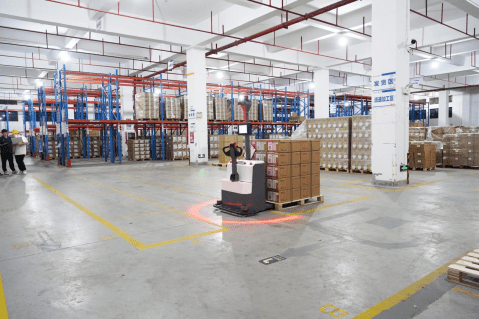
4. The Next Step: Self-Learning Logistics
The future of smart logistics lies in self-learning AI systems.
By analyzing operational history and real-time feedback, autonomous forklifts will continuously refine their performance:
-
Recognize high-frequency routes and optimize them automatically.
-
Adjust dispatching strategies based on seasonal demand changes.
-
Collaborate with AGVs, AMRs, and robotic arms to achieve fully automated logistics ecosystems.
AI + Autonomous Forklifts — The Last Mile of Cost Reduction
In manufacturing digitalization, the combination of AI and autonomous forklifts isn’t just automation—it’s intelligence.
It transforms logistics from “just moving goods” to “moving smartly and efficiently.”
The result: reduced costs, improved efficiency, and consistent delivery reliability.
As Reeman’s success has shown—
Smart logistics isn’t about replacing humans. It’s about rebuilding the logic of manufacturing efficiency