Automated AMR Material Handling Models: How to Reduce Manual Labor in Factories
Date Published

In the modern manufacturing landscape, shifting toward Automated Material Handling Models has become the primary strategy for companies looking to survive the global labor crisis. As recruiting and retaining qualified forklift operators becomes increasingly difficult, factories must find innovative ways to move goods without human intervention. Consequently, adopting Automated Material Handling Models—specifically through Reeman’s Ironhide and Rhinoceros AMR series—allows businesses to transition from labor-heavy operations to lean, autonomous systems.
The Shift to New Automated Material Handling Models
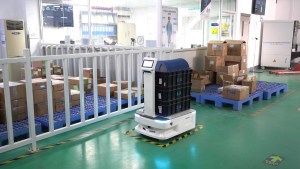
The most significant benefit of these new Automated Material Handling Models is the massive reduction in repetitive physical tasks. Traditionally, automotive parts workers had to spend hours pulling heavy carts and loading pallets, which often led to high turnover rates and workplace fatigue. However, because modern Automated Material Handling Models utilize advanced SLAM navigation, these robots can follow complex delivery schedules autonomously. Therefore, human employees are freed from the “muscle work” and can be reassigned to high-level quality control and assembly roles.
Furthermore, these models eliminate the unpredictability associated with manual labor. While human-led logistics are often affected by shift changes or personal breaks, Automated Material Handling Models provide consistent 24/7 output. Instead of dealing with fluctuating productivity levels, factory managers can rely on a steady flow of components. This consistency is essential for maintaining the high-speed requirements of modern automotive assembly lines, where even a five-minute delay can be extremely costly.
Implementing Smart Automated Material Handling Models with Reeman
To achieve long-term success, an organization must choose Automated Material Handling Models that are flexible enough to scale. Reeman’s technology is designed for rapid deployment, meaning that the transition to automation does not require shutting down the production floor. This level of Automated Material Handling Models integration provides several key operational advantages:
-
Dynamic Path Optimization: Avoiding obstacles in real-time to maintain the fastest possible cycle times.
-
Intelligent Fleet Management: Coordinating multiple AMR units to work in harmony without traffic congestion.
-
Plug-and-Play Setup: Mapping new environments quickly without the need for fixed infrastructure like wires or magnets.
In addition to these technical features, the overall safety of the workshop is greatly improved. By replacing manual pallet jacks with an Automated Material Handling Models framework, you create a more predictable and controlled environment. In conclusion, if you are looking for a reliable way to decrease your reliance on manual labor, the transition to Reeman’s autonomous mobile robots is the most effective and future-proof strategy for your enterprise.