
Building Greener Warehouses with Electric Autonomous Forklifts and AGVs
Date Published

Sustainability is no longer a buzzword—it’s a requirement. As warehouses face pressure to cut emissions and operate responsibly, electric autonomous material handling vehicles are stepping into the spotlight. These include autonomous forklifts, AGVs, and AMRs that replace diesel-powered equipment and reduce energy waste.
For warehouse managers, the green shift is not just about corporate social responsibility. It’s also about cutting operating costs, improving efficiency, and preparing for stricter environmental regulations.
So how exactly do electric autonomous vehicles create greener warehouses? Let’s dive in.
Why Traditional Forklifts Fall Short
Conventional forklifts and material movers often run on diesel or LPG. While powerful, they come with downsides:
-
High emissions: Contributing to indoor air pollution and overall carbon footprint.
-
Noise pollution: Making warehouses uncomfortable and unsafe.
-
High maintenance: Internal combustion engines require more servicing, adding costs and downtime.
As sustainability goals rise, these forklifts struggle to meet the needs of modern warehouses.
How Electric Autonomous Vehicles Reduce Emissions
Switching to electric autonomous forklifts and AGVs delivers immediate environmental and operational benefits:
-
Zero On-Site Emissions
Electric power eliminates exhaust fumes, improving air quality and reducing carbon output. For indoor warehouses, this creates healthier working conditions. -
Energy Efficiency
Electric drivetrains convert more energy into movement compared to combustion engines. When combined with smart pathfinding, AGVs consume even less energy per task. -
Intelligent Fleet Scheduling
AI-driven fleet management ensures vehicles operate efficiently—avoiding idle time and unnecessary routes, which lowers total energy use. -
Renewable Energy Integration
Many facilities now charge autonomous forklifts using solar or wind energy. This further reduces their carbon footprint, creating a truly sustainable supply chain.
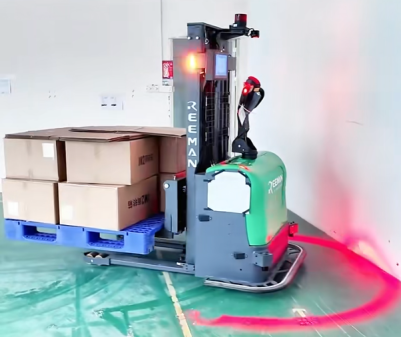
👉 For example, Reeman’s electric autonomous forklifts run on Li-FePO₄ batteries with automatic charging, enabling 8+ hours of continuous operation without emissions.
Cutting Costs While Going Green
Green doesn’t mean expensive. In fact, electric AGVs and forklifts often pay for themselves over time:
-
Lower fuel costs: Electricity is cheaper and more stable in price than diesel.
-
Reduced maintenance: Fewer moving parts mean fewer breakdowns.
-
Higher efficiency: Smart routing cuts unnecessary driving, saving both time and energy.
A logistics client adopting Reeman’s AGV forklifts reported a 20% reduction in energy consumption and lower operating costs within the first year.
Beyond Carbon: Other Sustainability Benefits
Electric autonomous vehicles bring additional advantages beyond emissions:
-
Noise reduction: Quieter operations improve working conditions.
-
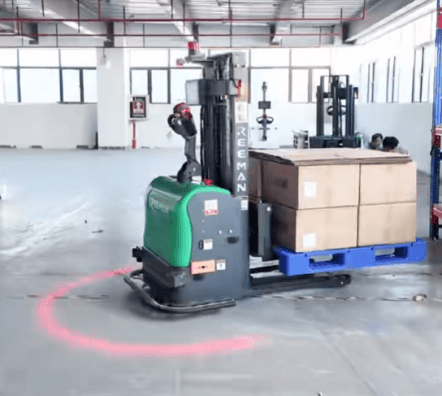
Smaller footprint: Mini AGV forklifts, like Reeman’s MBOT10F, can operate in 1.1m narrow aisles, maximizing warehouse space without expansion.
-
Scalability: Fleets can be expanded without a proportional rise in emissions.
Preparing for the Future
Governments worldwide are tightening emissions regulations, and customers are demanding greener supply chains. Adopting electric autonomous forklifts and AGVs is not just a choice—it’s a strategic investment for future competitiveness.
Conclusion
The path to a sustainable warehouse runs on electricity and autonomy. By adopting electric autonomous material handling vehicles, warehouses reduce their carbon footprint, cut operating costs, and future-proof operations.
Reeman’s fleet of autonomous forklifts and AGVs demonstrates how logistics operations can be both green and efficient—proving that the warehouse of the future is not only smarter but also cleaner