How to Choose the Right AMR Forklift for Your Factory?
Date Published

Investing in an AMR (Autonomous Mobile Robot) forklift can transform your factory’s logistics. But with so many options on the market, how do you pick the right one?
This guide breaks down the key factors to consider before buying, helping you avoid costly mistakes and choose a model that truly fits your production environment.
1. Start with Your Factory Layout
The physical environment is the foundation of AMR forklift selection. Ask yourself:
-
Are there narrow aisles or sharp turns?
-
Do you operate in multi-floor buildings?
-
Is it a new facility or a legacy factory with space limitations?
If your site is older or space-constrained, look for a forklift with:
-
Compact chassis and small turning radius
-
SLAM navigation (no markers or floor modifications needed)
-
Elevator compatibility for multi-floor movement
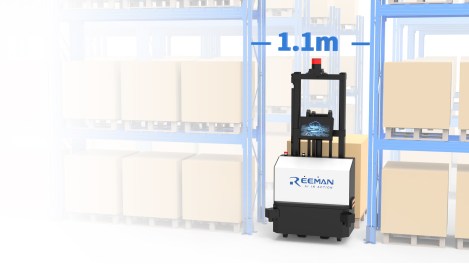
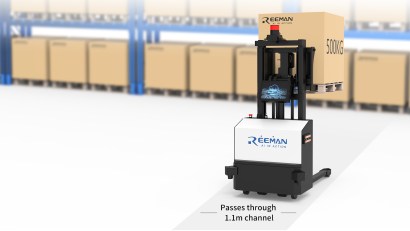
For example, Reeman’s AMR forklift supports plug-and-play deployment, narrow aisle operation, and automatic elevator riding—ideal for tight, existing layouts.
2. Match the Load Capacity to Your Workflow
Don’t overpay for capacity you don’t need. Most factories handle standard pallets weighing:
-
500–1000 kg → A 1-ton AMR forklift is enough
-
1000–1500 kg → Choose a 1.5-ton model
-
1500+ kg or non-pallet loads → Look for heavy-duty models
Also, check for pallet detection capability to ensure automatic, accurate pickup.
3. Consider Task Type and Repetition
Ask: What tasks will the AMR perform?
-
Repetitive pallet transport between warehouse and line? → Prioritize stability and scheduling software
-
Material delivery to multiple stations? → Go for multi-point navigation and high localization accuracy
-
Mixed human-robot environment? → Safety sensors and real-time obstacle avoidance are must-haves
AMR forklifts shine in structured, repeatable tasks. If your workflow is flexible and needs frequent changes, AMR is a better fit than AGV.
4. Don’t Ignore Integration Requirements
The best AMR forklift is the one that fits into your existing systems. Consider:
-
Does it support integration with WMS/MES/ERP platforms?
-
Is there a cloud-based fleet management system?
-
Can it auto-charge without manual intervention?
Also, ask vendors how long deployment takes. A plug-and-play solution like Reeman’s can be up and running in under an hour—no ground markings or reconstruction required.
5. Compare Support, Service, and Trial Options
Deployment is just the beginning. Ensure the vendor provides:
-
Local support or remote diagnostics
-
Spare parts availability
-
Trial use or return policy (e.g. Reeman offers a 15-day no-reason return)
This helps you test the system in real production before full rollout.
6. Budget with Long-Term ROI in Mind
While upfront cost matters, focus on total cost of ownership (TCO):
| Factor | Impact |
|---|---|
| Deployment time | Shorter = faster ROI |
| Downtime | Lower with autonomous obstacle handling |
| Maintenance | Lower with SLAM vs tape-based AGV systems |
| Labor savings | Full ROI often within 6–12 months |
Cheap robots may cost more in the long run if they lack flexibility or cause production downtime.
The Best AMR Forklift Is the One That Fits Your Factory
There’s no “one-size-fits-all” when it comes to AMR forklifts. Start by understanding your site, your materials, and your workflows. Then choose a forklift that:
✅ Navigates your environment
✅ Handles your load size
✅ Supports your system integration
✅ Comes with flexible trial and after-sales support
Brands like Reeman specialize in factory-friendly, quick-deploy AMR forklifts that don’t require infrastructure upgrades—making them a practical choice for companies taking their first step toward automation.