
Overcoming the Dust Problem with Intelligent Sensor Maintenance
Date Published

Introduction: The Dust Challenge for Modern Robots
Robots are no longer confined to clean rooms or labs. They are deployed across industries such as construction, agriculture, mining, and logistics—harsh environments where dust is omnipresent. While rugged exteriors protect against physical damage, a far more subtle threat undermines their autonomy: sensor contamination.
Dust may seem minor, but when it accumulates on sensitive components like LiDARs, cameras, and infrared sensors, it begins to affect perception, navigation, and even safety. This isn’t just a minor inconvenience—it’s a roadblock for robotic scalability and sustainability.
Why Sensor Contamination Is a Critical Threat
In dusty environments, even a thin layer of particles on a sensor’s surface can distort data:
-
Visual sensors lose clarity
-
LiDAR becomes noisy or blind
-
Infrared sensors miscalculate distance
The outcome? Navigation errors, dropped tasks, increased power use, or complete operational failure.
From a business standpoint, this means:
-
More downtime
-
More maintenance costs
-
Shorter robot lifespan
-
Lower ROI on robotic automation
Conventional Solutions Fall Short
Most robots currently use passive strategies to resist dust:
-
Protective casings or filters
-
Hydrophobic or anti-static coatings
-
Scheduled manual cleaning
But in dynamic, high-dust environments, these aren’t enough. Dust still settles. Cleaning still needs to happen. And manual maintenance runs counter to the idea of true autonomy.
Reeman’s Sustainable Solution: Intelligent Sensor Self-Cleaning
At Reeman, we asked a different question:
What if robots could clean their own sensors—just like they charge themselves?
We’re developing a built-in, autonomous dust-removal system, specifically designed for robots working in dusty environments.
✅ Key Features of Reeman’s Self-Cleaning Sensor Module:
-
Real-time detection of dust accumulation
-
Targeted air jets to clear lenses and sensor windows
-
Automated cleaning cycles based on sensor performance
-
Modular design for new builds or retrofits
-
Low power usage, preserving battery efficiency
This is more than just a cleaning device—it’s an operational upgrade that keeps robots functional, accurate, and independent over long deployments.
Why This Innovation Matters
Autonomous robots are central to future infrastructure and sustainability strategies. But to achieve this, they must be resilient, reliable, and low-maintenance. That’s why Reeman’s innovation isn’t just about solving a technical problem—it’s about enabling a new standard of sustainable robotics.
By reducing the need for human maintenance, Reeman’s system:
-
Extends mission uptime
-
Reduces operational cost
-
Increases sensor longevity
-
Improves real-world safety and navigation accuracy
Real-World Impact: Where Dust-Proof Robots Are Needed Most
Reeman’s intelligent dust cleaning system is ideal for:
-
🏗️ Construction sites — where dust from cutting, digging, and movement is constant
-
🌾 Agricultural fields — where dry soil particles clog sensors quickly
-
🌬️ Desert operations — such as solar farm inspections or military use
-
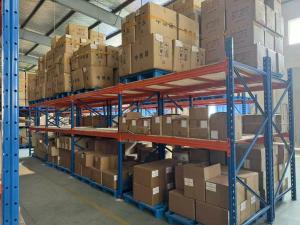
📦 Logistics hubs — where cardboard dust accumulates quickly on indoor robots
-
🧱 Cement or mining plants — where air quality is constantly poor
These are high-value, high-dust environments where traditional robots fail over time—but Reeman-enabled robots keep going.
Reeman’s Vision: Autonomy That Sustains Itself
True automation means more than completing tasks—it means maintaining oneself without interruption. Reeman’s upcoming self-cleaning sensor technology takes us one step closer to that future.
We envision:
-
Seamless integration with perception software
-
Real-time coordination with navigation systems
-
Retrofitting options for popular robot models
-
Strategic partnerships across industrial sectors
Conclusion: A New Chapter in Robotic Reliability
As robots become integral to critical industries, they must evolve to handle real-world complexity—including something as simple but destructive as dust. Reeman is proud to pioneer a solution that not only addresses this issue, but reframes it as an opportunity to build smarter, more autonomous, and more sustainable machines.
We’re not just building for today—we’re designing for where robotics must go next.