Reeman Hammer 2.0: Redefining Industrial Autonomous Handling With Next-Generation Technology
Date Published

As smart manufacturing accelerates globally, industrial material handling has become one of the core determinants of production efficiency and safety. Traditional manually operated forklifts frequently face issues such as operator fatigue, human error, collisions, and tipping accidents, which directly affect productivity and factory stability.
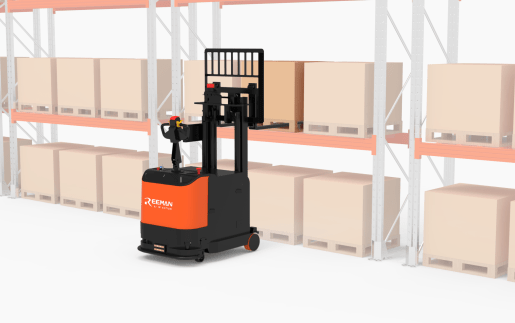
Responding to these industry-wide challenges, Reeman Robotics, leveraging years of experience in industrial automation, has launched the Hammer 2.0 autonomous counterbalanced forklift. Designed around the principles of stability, intelligence, efficiency, and safety, the Hammer 2.0 represents a full-stack technological upgrade and sets a new benchmark for unmanned industrial handling.
Industrial-Grade Performance: Designed for Real Workloads
For any industrial machine, core performance is everything.
The Hammer 2.0 achieves significant advancements in load handling:
-
1.2-ton rated load capacity
-
2.5-meter lifting height
-
Compatible with block pallets , stringer pallets, and other common pallet types
One standout innovation is its newly engineered counterweight system, optimized around torque balance. This ensures the forklift remains stable during:
-
Full-load starts
-
Sudden braking
-
Rapid turning
-
Tight maneuvering
These optimizations fundamentally eliminate the tipping and forward-leaning risks that frequently occur during heavy-load operations with traditional forklifts or early-generation AGVs.
High Efficiency & High Agility for Complex Factory Layouts
The 1.13-meter turning radius enables the Hammer 2.0 to operate efficiently in:
-
Narrow factory aisles
-
Compact warehouse zones
-
Medium-to-small manufacturing layouts
-
Multi-process production lines
Factories no longer need to reserve excessive operating space, allowing storage density to increase and logistics routes to become more efficient. In real deployments, Hammer 2.0 has demonstrated over 30% improvement in material-handling efficiency, significantly reducing waiting times across production processes.
Behind this efficiency is an advanced intelligent driving system featuring:
Multi-Sensor Fusion
-
3D obstacle avoidance radar
-
Vision sensors
-
Safety lasers and proximity detection
These enable real-time detection of pedestrians, machinery, and other obstacles—executing intelligent avoidance maneuvers instantly.
±10mm Positioning Accuracy
Whether lifting, transporting, docking, or pallet placement, Hammer 2.0 ensures precision handling, dramatically reducing:
-
Pallet misalignment
-
Product damage
-
Equipment collisions
-
Process interruptions
Long Battery Life, Automatic Charging, and 24/7 Operation
To support uninterrupted production, the Hammer 2.0 uses a high-performance LiFePO₄ battery known for:
-
High thermal stability
-
Long cycle life
-
Consistent safe performance
It delivers up to 6 hours of full-load continuous operation, covering a full production shift with ease.
For unmanned energy replenishment, the Hammer 2.0 supports:
Autonomous Charging System
Using a mobile charging dock, the forklift can automatically:
-
Navigate to the charging point
-
Dock with high precision
-
Charge autonomously
-
Resume work from the task breakpoint
This allows true 24/7 non-stop operation without manual intervention, maximizing equipment availability.
360° Safety System for Industrial Environments
Safety is a foundational requirement for autonomous handling equipment.
Hammer 2.0 integrates a comprehensive multi-layer safety protection architecture:
Real-Time Dynamic Obstacle Avoidance
Using fused sensors, the forklift detects humans, equipment, pallets, and moving obstacles within milliseconds.
Intelligent Protection Mechanisms
-
Automatic speed reduction
-
Emergency braking
-
Autonomous rerouting
-
Collision-prevention bars
-
Safety touch edges
Additionally, features such as automatic fault alarms and emergency stop buttons further reinforce operational safety.
Deep System Integration for Fully Unmanned Logistics
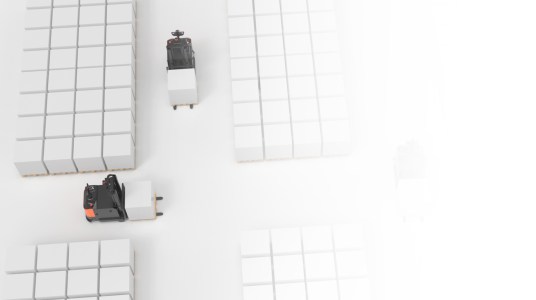
The Hammer 2.0 features strong compatibility with factory digital systems. It can seamlessly integrate with:
-
MES (Manufacturing Execution Systems)
-
WMS (Warehouse Management Systems)
-
ERP platforms
This enables:
-
Automatic task assignments
-
Real-time data synchronization
-
Fleet management
-
Full-process visibility
Managers can monitor forklift routes, performance, work status, utilization, and historical task records via an intuitive dashboard—unlocking opportunities for continuous optimization.
This “device → system → management” integration creates a fully unmanned logistics loop, supporting digital transformation across production and warehousing.
Hammer 2.0: A New Standard for Autonomous Industrial Handling
Through the Hammer 2.0, Reeman Robotics demonstrates its deep technological foundation in the autonomous forklift field and its clear understanding of industrial logistics needs.
By combining:
-
Reliable industrial-grade hardware
-
AI-driven intelligence
-
Advanced navigation
-
High-level safety protection
-
Long-term operational stability
-
Full ecosystem connectivity
the Hammer 2.0 autonomous forklift is not just a product—it is a powerful, practical, and scalable solution that accelerates the era of fully unmanned industrial material handling.