
Why Are More Factories Choosing AMR Robots Instead of AGVs?
Date Published

Why AMR Robots Are Replacing AGVs in Modern Factories
For decades, factories relied on AGVs (Automated Guided Vehicles) for automated material handling. But today, an accelerating shift is taking place—more and more factories are choosing AMR robots instead of AGVs.
Why? The answer is straightforward: higher efficiency, lower cost, and dramatically faster deployment.
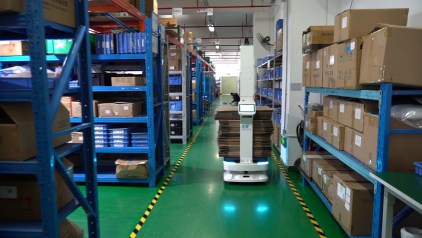
1. AMR Robots Don’t Need Magnetic Strips or Reflectors
Traditional AGVs depend on fixed routes:
-
Magnetic strips on the floor
-
QR codes or reflectors
-
Physical markers for navigation
This means every layout change requires construction, reinstallation, and downtime—expensive and slow.
In contrast, AMR robots use LiDAR + 3D vision for autonomous SLAM navigation.
They do not require floor modifications.
With AMRs:
-
No construction
-
No floor marking
-
No downtime during layout changes
-
Path adjustment takes seconds, not days
This flexibility is the #1 reason factories are abandoning AGVs.
2. AMR Robots Deploy Faster — as Quick as 3 Days
Factories today need agility, not months of integration.
A traditional AGV project can take:
-
3–6 months for route construction
-
Additional time for testing and calibration
Meanwhile, Reeman AMR robots can be deployed in as little as 3 days, thanks to:
-
Automatic mapping
-
Click-to-deploy task configuration
-
No ground modification
-
Adaptive path planning
For factories with frequent layout or production changes, AMRs are the only practical choice.
3. AMRs Are Truly Autonomous — Adaptable to Dynamic Environments
AGVs follow fixed paths.
If someone blocks the route? It stops and waits.
AMRs are designed for real factory conditions:
-
Forklifts moving
-
Workers passing by
-
Pallets placed irregularly
-
Temporary obstacles
Reeman AMR robots can:
-
Dynamically plan new routes
-
Avoid obstacles in real time
-
Adjust speed automatically
-
Safely navigate mixed human-robot environments
This adaptability makes AMRs suitable for multi-shift, high-traffic factories.
4. Smart Functions Make AMRs More Efficient Than AGVs
Reeman AMR robots offer industry-leading intelligent features:
✔ Automatic charging
Returns to the charging dock without human assistance.
✔ Multi-floor elevator dispatch
Can call and ride elevators automatically, ideal for multi-level factories.
✔ One-click call and task assignment
Operators can summon robots from any workstation.
✔ Multi-robot fleet coordination
Dozens of AMRs can run simultaneously without traffic jams or task conflicts.
AGVs cannot match this level of intelligence or coordination.
5. AMRs Reduce Labor Costs—One Unit Equals Three Workers
One Reeman AMR robot can complete hundreds of transport cycles per day—the equivalent of three trained forklift operators.
Benefits:
-
24/7 operation with no breaks
-
No overtime cost
-
No hiring difficulty
-
No training or safety concerns
With labor shortages increasing, this efficiency is a major competitive advantage.
6. Lower Total Cost, Higher ROI
When total cost is evaluated—not just purchase price—AMRs offer significantly better ROI:
-
Zero layout modification cost
-
Lower maintenance cost
-
Faster deployment = quicker payback
-
Higher adaptability = longer usable lifespan
Most factories see full ROI within 6–12 months.
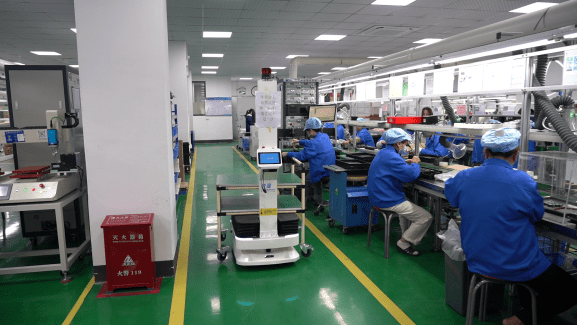
AGVs Were for Yesterday — AMRs Are for the Future
AGVs worked well in stable, predictable environments.
But factories today need speed, flexibility, and reliability.
AMR robots are the natural evolution of automated intralogistics.
A modern factory choosing AMR robots gains:
-
Faster deployment
-
Lower operating cost
-
Higher adaptability
-
Enhanced safety
-
Multi-floor automation
-
Uninterrupted 24/7 operation
This is why more factories are choosing AMR robots over AGVs—and never looking back.