
Why the Reeman Mini 2.0 Autonomous Forklift Is the Best Starting Point for Factory Automation
Date Published

Small Space, Big Possibilities
Many factory owners ask the same question:
“Our facility isn’t large, and our aisles are narrow—can we really use an autonomous forklift?”
With the Reeman Mini 2.0 autonomous forklift, the answer is a confident yes.
It’s not a “scaled-down forklift,” but a purpose-built automation tool engineered for tight, complex spaces common in older factory layouts.
The Mini 2.0 was designed from the ground up to solve the spatial limitations that prevent many small and medium-sized factories from adopting unmanned transport systems.
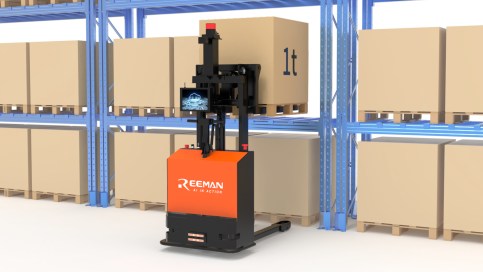
1. Compact Design That Fits Almost Any Factory
When it comes to space adaptation, the Mini 2.0 delivers outstanding performance:
-
1.1 m minimum aisle width – easily navigates narrow spaces.
-
2.3 m pallet operation distance – efficient loading/unloading in tight areas.
-
1.3 m turning radius – ideal for U-shaped workflows and corner transitions.
These specs mean 90% of existing factories can deploy the Mini 2.0 without any renovation.
Whether your factory was built 5 or 25 years ago, this forklift fits right in—literally.
2. Industrial-Grade Performance for Real Operations
Compact size doesn’t mean compromised capability.
The Mini 2.0 maintains full industrial-grade handling power with:
-
1,000 kg rated load capacity.
-
1-meter lifting height, covering most pallet and stacking needs.
This makes it ideal for replacing manual forklifts or semi-electric pallet jacks in small factories.
It’s a natural transition point toward unmanned logistics—smooth, efficient, and low-risk.
3. Fast Deployment, Low Investment, and Minimal Risk
For factories new to automation, cost and downtime are major concerns.
That’s why the Mini 2.0 is designed for light deployment and fast ROI.
-
Deployment time: 1–3 days on average.
-
Navigation: Laser SLAM mapping — no reflectors, no construction, no downtime.
-
Adaptability: Fully operational in unmodified environments.
Many electronics, injection molding, and food processing plants have already deployed Mini 2.0 units to replace manual forklifts in previously “unreachable” areas.
The feedback is consistent:
“It runs smoothly, never gets stuck, and doesn’t require operator intervention.”
4. The Perfect Automation Entry Point for SMEs
From an investment standpoint, the Mini 2.0 autonomous forklift represents the ideal balance between low cost and high efficiency:
-
Low risk: Affordable entry for small-batch, high-frequency logistics.
-
High flexibility: Works in narrow aisles, multiple workstations, and short routes.
-
Fast ROI: Reduces labor costs and boosts operational efficiency within months.
For factories starting their automation journey, Mini 2.0 is a safe, smart first step—a “lightweight automation upgrade” that quickly proves its value in real operations.
5. Built for Real Factories, Not Just Labs
The Mini 2.0 isn’t a luxury robot—it’s a practical solution designed around factory pain points.
It doesn’t chase theoretical benchmarks; instead, it focuses on long-term reliability and hands-free operation in everyday conditions.
From day one, its mission has been clear:
“To make automation accessible for every factory—regardless of size, layout, or budget.”
By eliminating space barriers and reducing deployment complexity, Reeman Mini 2.0 empowers factories to achieve true unmanned logistics without the risk.
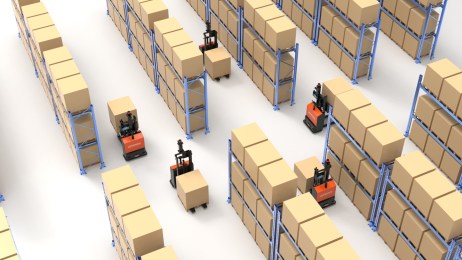
The Smartest Way to Start Factory Automation
The Reeman Mini 2.0 autonomous forklift gives small and medium-sized factories a realistic way to go unmanned.
With tight-space adaptability, industrial reliability, and minimal setup requirements, it’s the perfect bridge from manual operations to smart logistics.
Experience the future of compact automation today — visit Reeman Official Website to explore the Mini 2.0 and discover how it can transform your factory floor