Is Multi-AMR Forklift Collaboration Feasible? Key Sys
Date Published

In modern warehouses and manufacturing plants, deploying multiple AMRs…
Can multiple AMRs work together safely and efficiently?
This guide addresses this question and explores the fundamental systems required to implement AMRs, how they work in real-world scenarios, and considerations when choosing a solution.
1. Can AMR Forklifts Work Together?
Yes—multi-AMR forklift collaboration is not only feasible but already widely implemented.
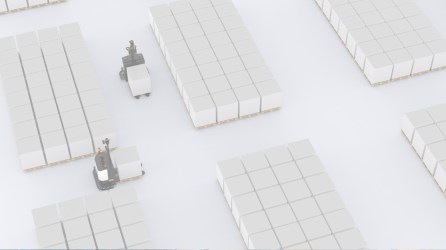
Unlike traditional forklifts or AGVs, autonomous mobile forklifts (AMRs) are equipped with advanced navigation, obstacle detection, and coordination logic. With a centralized Fleet Management System (FMS), these robots can:
-
Dynamically avoid each other and human traffic
-
Assign tasks based on location, battery level, or priority
-
Work across multiple areas or even floors
-
Cooperate in narrow aisles or tight zones
For example, solutions like Reeman’s AMR forklift use self-developed scheduling and control systems to ensure vehicles don’t block each other or congest the workspace—ideal for high-throughput, high-density environments.

2. What Systems Are Required for AMR Forklift Fleet Control?
To allow AMR forklifts to operate as a team, you’ll need several key components:
| System Module | Function Description |
|---|---|
| Fleet Management (FMS) | Assigns and prioritizes tasks, plans routes in real time |
| Unified SLAM Mapping | Allows all forklifts to navigate on a shared map |
| Task Management (TMS) | Connects with WMS/MES to automate task distribution |
| Communication Network | Ensures low-latency data exchange between robots and backend |
| Elevator & Door Control | Enables unmanned cross-floor pallet transport |
| Traffic & Yield Logic | Prevents jams in shared zones and manages vehicle flow |
3. Real-World Applications: Where Multi-AMR Forklifts Shine
✅ Old Multi-Floor Warehouses
AMR forklifts connect to elevators via smart relays or API integration, enabling seamless movement across floors. No human escort is required.
✅ High-Throughput Logistics Centers
Multiple forklifts pick up and drop off pallets at different docks simultaneously. Fleet control assigns tasks dynamically, reducing idle time and improving turnaround speed.
✅ Smart Manufacturing Plants
AMR forklifts synchronize with production line data to deliver raw materials and transport finished goods between stations—ensuring non-stop flow and fewer delays.
4. Common Challenges and How to Solve Them
| Problem | Solution |
|---|---|
| No existing FMS or outdated system | Use plug-and-play fleet control tools like Reeman’s modular scheduler |
| Interference or map inconsistencies | Adopt high-precision, shared SLAM maps for all forklifts |
| Poor WMS/MES integration | Select systems with open APIs or ready-made connectors |
| Weak or unstable network | Upgrade to industrial Wi-Fi or deploy local 5G edge gateways |
| No elevator/door control support | Use remote relay boxes or IoT-enabled elevator adapters |
5. Tips for Selecting the Right Multi-AMR Forklift Solution
If your facility uses—or plans to use—more than 3 autonomous forklifts, or spans multiple floors or zones, fleet collaboration is not optional—it’s mission-critical.
✅ Selection Checklist:
-
Choose systems that support dynamic route planning and task scheduling
-
Ensure shared map navigation with high obstacle sensitivity
-
Look for elevator and gate integration features
-
Opt for scalable AMR forklifts with minimal infrastructure requirements
💡 Pro Tip: Reeman’s AMR forklifts support real-time scheduling, elevator API control, pallet recognition, and old-factory deployment—making them ideal for rapid, scalable deployment with minimal disruption.
Final Thoughts
Multi-AMR forklift collaboration is not just a trend—it’s becoming the standard for smart logistics. With the right systems and deployment approach, your fleet can operate in harmony across large or multi-floor facilities, delivering high efficiency and automation.
👉 Explore flexible, elevator-ready AMR forklift platforms at Reeman, designed for real-world scalability in factories, warehouses, and beyond.