What Is an OEM Autonomous Forklift? How Does It Differ from an ODM Autonomous Forklift?
Date Published

In the fast-evolving autonomous forklift industry, more manufacturers, system integrators, and brand owners are turning to OEM (Original Equipment Manufacturer) and ODM (Original Design Manufacturer) models. These approaches allow businesses to bring products to market faster, with lower R&D costs and greater flexibility.
But what exactly do OEM and ODM mean in the context of autonomous forklifts? And more importantly—how do you decide which model fits your business strategy? Let’s break it down in simple terms.
1. What Is an OEM Autonomous Forklift?
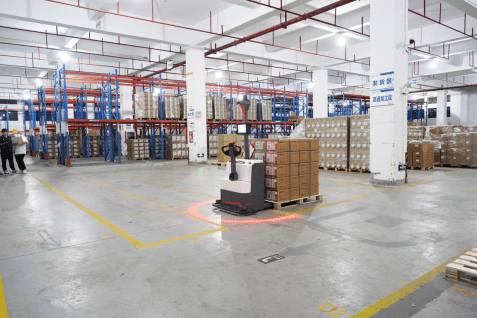
OEM stands for Original Equipment Manufacturer. In this model, a manufacturer produces forklifts that another company sells under its own brand name. The manufacturer handles production, testing, and quality control, while the client focuses on branding and sales.
In the autonomous forklift sector, this typically means:
-
The manufacturer designs and produces the complete forklift.
-
The client provides the brand name, logo, and market positioning.
-
The final forklift carries the client’s branding and enters the market as their product.
✅ Key Benefits of OEM Autonomous Forklifts:
-
No need for in-house R&D or production facilities.
-
Faster time-to-market (products can launch in a few months).
-
Proven performance and reliability from an established manufacturer.
-
Ideal for system integrators, resellers, and logistics brands entering the market quickly.
2. What Is an ODM Autonomous Forklift?
ODM means Original Design Manufacturer. This model goes beyond manufacturing—it includes customized design, engineering, and production based on the client’s specifications.
In other words, the customer shares their application requirements—such as payload capacity, navigation technology, or operating environment—and the manufacturer develops a tailored forklift solution from the ground up.
✅ Key Benefits of ODM Autonomous Forklifts:
-
High level of customization and proprietary product design.
-
Deep system integration with WMS, MES, or ERP platforms.
-
Enables differentiation and long-term brand development.
-
Ideal for large enterprises or OEMs seeking a strategic partnership.
3. The Core Difference Between OEM and ODM
The distinction is simple yet crucial:
-
OEM = You have the brand; we make the product.
-
ODM = You have the idea; we design and build it.
OEM emphasizes brand labeling and quick production,
while ODM focuses on innovation, design, and technical customization.
OEM suits companies that want to launch quickly with existing models,
ODM fits companies that need unique, scenario-based solutions for competitive differentiation.
4. Which Model Is Right for You?
-
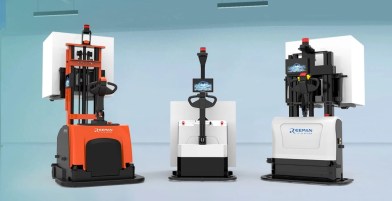
If you are a global reseller or logistics brand, and your goal is to build a product line fast—choose OEM.
Reeman offers proven models like the Mini Autonomous Forklift and 1.5T Laser SLAM Forklift, complete with multilingual interfaces and global support. -
If you are a manufacturing enterprise or system integrator requiring deeper customization—such as multi-floor dispatching, elevator interaction, or cold-chain compatibility—then ODM is your best option.
Reeman provides custom structural design, SLAM algorithm optimization, and API integration services for seamless system alignment.
5. OEM and ODM: The Two Engines Driving the Future of Autonomous Forklifts
As the global demand for intelligent logistics grows, OEM and ODM models are becoming essential strategies for scaling the autonomous forklift industry.
-
OEM accelerates market entry for brand owners.
-
ODM empowers enterprises to create differentiated, high-performance solutions.
With its self-developed SLAM navigation, AI fleet management, and scalable AMR chassis platform, Reeman offers both OEM and ODM partnerships—helping clients worldwide bring smart logistics to life faster and smarter.
Whether your goal is to build your own brand or upgrade factory automation, choosing the right OEM or ODM partner is your first step toward an intelligent logistics ecosystem