
What Is the Strongest Robotic Arm for Industrial Use?
Date Published

In the world of industrial automation, strength matters—especially when handling heavy loads, lifting large parts, or automating demanding tasks in manufacturing, logistics, and construction. So, what is the strongest robotic arm available for industrial use in 2025? Let’s explore the top contenders, performance metrics, and how to choose the right heavy-duty robotic arm for your business.
Why Payload Capacity Matters
In industrial robotics, payload capacity refers to the maximum weight a robotic arm can carry at its full extension while maintaining precision and repeatability. Stronger arms are vital for applications like:
-
Palletizing heavy products
-
Automated welding of large metal parts
-
Material handling in automotive and aerospace industries
-
Lifting raw materials or tools on the production floor
Top Heavy-Duty Robotic Arms in 2025
Here are some of the strongest robotic arms available today, known for their high payload capacity and robust design:
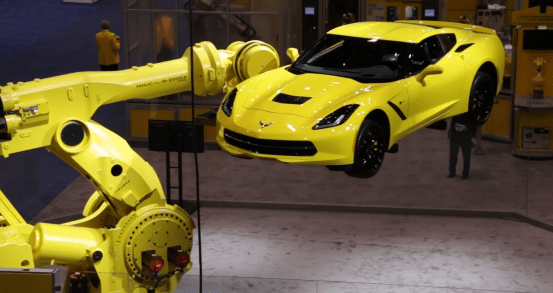
1. Fanuc M-2000iA Series
-
Payload: Up to 2,300 kg (5,070 lbs)
-
Reach: Up to 4.7 meters
-
Use Case: Automotive body frame lifting, press machine loading
-
Why It’s Strong: Often referred to as the “world’s strongest robot,” this arm is designed for ultra-heavy-duty tasks.
2. KUKA KR 1000 Titan
-
Payload: Up to 1,300 kg (2,866 lbs)
-
Reach: 3.2 meters
-
Use Case: Aerospace, foundries, and large component handling
-
Notable Feature: First industrial robot certified for heavy-duty lifting
3. ABB IRB 8700
-
Payload: Up to 1,000 kg (2,204 lbs)
-
Reach: Up to 4.2 meters
-
Use Case: Automotive assembly, large part handling
-
Advantage: Compact footprint with powerful performance
4. Yaskawa Motoman GP400/GP600
-
Payload: 400–600 kg
-
Applications: Press tending, material removal, palletizing
-
Feature: High-speed handling of heavy parts
How to Choose the Right Strong Robotic Arm
When selecting a heavy-duty robotic arm, consider:
-
Payload vs. Reach: Some applications require long reach with medium weight capacity.
-
Speed and Accuracy: Strong doesn’t mean slow—check cycle times and repeatability.
-
Installation Footprint: Space constraints may limit large-base robots.
-
Maintenance & Cost: Higher payload robots often require more investment and upkeep.
What About Edge AI and Heavy Robotics?
Emerging technologies like Edge AI are being integrated into even the strongest robotic arms. This allows real-time data processing on the robot itself, improving adaptive handling of unpredictable heavy loads, and reducing latency in safety responses.
Final Thoughts
If you’re looking for the strongest industrial robotic arm, the Fanuc M-2000iA series leads the pack with its unmatched payload. However, depending on your industry and application, options like KUKA KR 1000 or ABB IRB 8700 may offer better balance between strength, speed, and space efficiency.
Choosing the right robotic arm isn’t just about brute force—it’s about finding a machine that meets your production goals safely, reliably, and with long-term value.