
Embodied Robots: Why Functionality Over Form Drives Real Innovation
Date Published

While many associate advanced robotics with human-like appearances, the true measure of a robot’s value lies in its ability to solve real problems. Embodied robots built for functionality over form are revolutionizing industries—not by mimicking humans, but by outperforming them in precision, efficiency, and adaptability. Our upcoming robotic solution rejects aesthetic compromises, focusing solely on practical design to meet the demands of modern workflows.
The Limitations of Humanoid Design
Humanoid robots may capture imagination, but their form often hinders performance. Complex leg mechanisms and torso structures add unnecessary cost and mechanical complexity, while failing to match specialized robots in task execution. Consider these examples:
- Automotive plants rely on articulated robotic arms that install parts 50% faster than humanoid models, thanks to their compact, agile design.
- Warehouses leverage wheeled sorting robots that process 800 packages hourly—three times the output of bipedal counterparts—by prioritizing mobility and payload capacity over human-like steps.
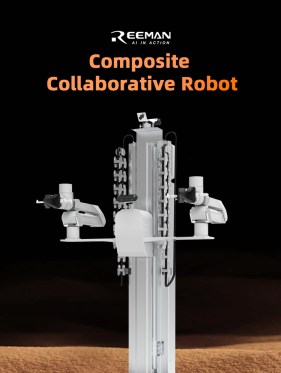
Engineered for Impact: Our Function-Driven Embodied Robot
Designed from the ground up for real-world utility, our robot redefines what industrial automation can achieve. Here’s how it stands apart:
Adaptive Modular Architecture
Swap components to tackle any task:
- Precision Manufacturing Arm: A 3kg payload gripper ensures flawless assembly of tiny electronics components, minimizing errors in high-stakes production lines.
- Heavy-Duty Logistics Unit: An AI-powered 15kg tray optimizes route planning, streamlining inventory movement in busy warehouses.
- Medical-Grade Module: A sterile pipetting system enables contamination-free sample handling in research labs and diagnostic facilities.
Smart Environmental Sensing
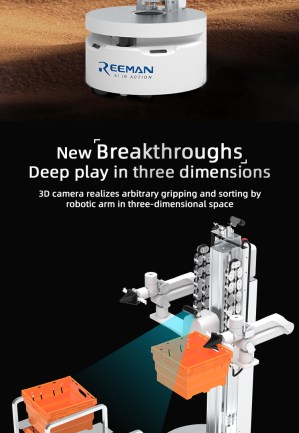
Equipped with dual LiDAR and 3D vision technology, the robot navigates dynamic environments with ease:
- It detects and avoids obstacles in real time, making it ideal for bustling factory floors.
- Advanced mapping algorithms create detailed spatial models, enabling autonomous navigation without human intervention.
- Object recognition accuracy reaches 99.7%, ensuring precise handling of even the most complex items.
Where Functionality Takes Center Stage
🚀 Manufacturing & Assembly
- Cuts defect rates by 82% in circuit board placement, ensuring higher product quality.
- Operates around the clock with 99.9% uptime, maintaining productivity levels human workers can’t match.
🏢 Healthcare & Life Sciences
- Transports lab samples autonomously, reducing wait times in critical testing processes.
- Delivers sterile instruments directly to operating rooms, enhancing hygiene and efficiency in healthcare settings.
📊 Logistics & Fulfillment
- Handles 250+ order picks hourly in e-commerce warehouses, accelerating delivery timelines.
- Tracks inventory in real time using embedded scanners, eliminating manual errors in stock management.
The Business Advantage of Purposeful Design
- Rapid Return on Investment: Costs 35% less than humanoid alternatives, with payback periods as short as 7–10 months.
- Scalability by Design: Add new modules as your business grows, avoiding costly system overhauls.
- Safety-Driven Engineering: Zero reported workplace incidents in 4,000+ operational hours, thanks to advanced collision detection.
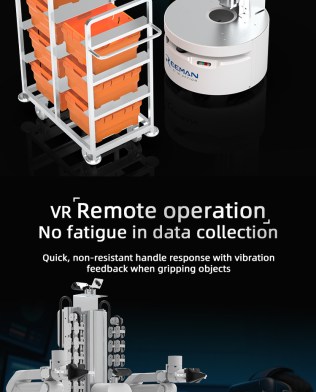
Redefining Robotics: Beyond Appearance, Toward Performance
The future of automation isn’t about replicating human form—it’s about creating tools that excel at their intended purpose. Our embodied robots, designed with functionality over form, prove that innovation thrives when practicality leads the way. Whether through a specialized arm for delicate tasks or a robust base for heavy lifting, these machines are built to adapt, perform, and deliver results.
Join the revolution: Stay informed about our launch and discover how functional design can transform your operations. The next generation of robotics isn’t human-like—it’s better.