Pros and Cons of Mini Forklifts: Is It Worth the Investment?
Date Published

In the era of smart logistics, the mini forklift has attracted growing attention. More and more businesses are asking: “What are the pros and cons of a mini forklift? Is it really worth the investment?”
This article explores both sides of the debate and helps you decide if a Reeman mini forklift fits your warehouse or factory needs.
Advantages of Mini Forklifts
1. Space Saving
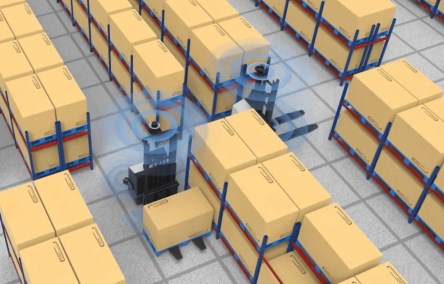
Traditional forklifts require aisles at least 2–3 meters wide. In contrast, a narrow aisle mini forklift can operate in spaces as tight as 1.1 meters. This allows warehouses to place racks closer together and increase storage capacity by more than 30%.
2. Reduced Labor Costs
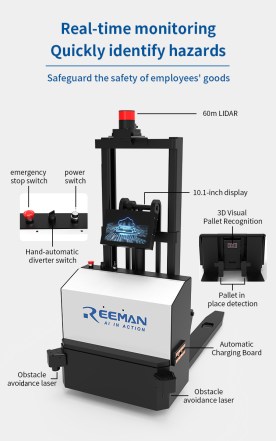
Mini forklifts run without human drivers. With Laser SLAM navigation and 3D vision obstacle avoidance, they can replace two or three workers. For companies facing labor shortages or high wages, this is a major advantage.
3. 24/7 Operation
Equipped with automatic charging, autonomous mini forklifts can run day and night. Unlike manual forklifts, they do not need shift changes. During peak e-commerce seasons, they keep goods moving without downtime.
4. Multi-Scenario Flexibility
From e-commerce warehouses to manufacturing plants, from hospitals to multi-floor distribution centers, mini forklifts adapt well. They support elevator integration and autonomous dispatch systems, enabling smooth cross-floor and multi-zone operations.
5. Easy Deployment
Take the Reeman mini forklift as an example. It does not rely on magnetic strips or QR codes. With built-in mapping and navigation, it is almost plug-and-play. This makes it ideal for small and medium businesses without advanced infrastructure.
Disadvantages of Mini Forklifts
1. Higher Initial Cost
Compared to manual forklifts, autonomous mini forklifts require a larger upfront investment. Although cost savings accumulate over time, smaller companies may feel short-term financial pressure.
2. Limited Load and Lifting Height
The Reeman mini forklift carries 500kg and lifts up to 1.6m. While this suits most standard pallets, it cannot replace heavy-duty forklifts or reach high-rack storage.
3. Network Dependency
A stable Wi-Fi or 5G connection is needed for smooth scheduling and communication. Poor network coverage may reduce efficiency.
4. System Integration Needed
For advanced use, mini forklifts connect with WMS or MES systems. Businesses without digital management may need extra upgrades before full automation.
Is a Mini Forklift Worth It?
The answer depends on your business scale and requirements.
-
✅ If your warehouse has limited space, high labor costs, or frequent overtime needs, a mini forklift is worth the investment. Many businesses recover costs within 6–12 months.
-
✅ If you operate in e-commerce, manufacturing, healthcare, hotels, or retail backrooms, then features like elevator control and narrow-aisle navigation are a perfect match.
-
❌ If your operation is small, your warehouse is spacious, and labor costs are low, the ROI may take longer to realize.
A Smart Step Toward Automation
The mini forklift is more than just a small machine. It represents an affordable entry point into warehouse automation. With benefits like space savings, lower labor costs, and 24/7 performance, it helps small and medium businesses compete in a fast-changing market.
The Reeman mini forklift stands out as a practical solution. It is compact, flexible, and intelligent—ideal for businesses aiming to improve efficiency without massive investments.
👉 Learn more about the Reeman Mini Forklift and see how it can transform your warehouse operations.